


Ferro Niobium
Product Overview
Production Process
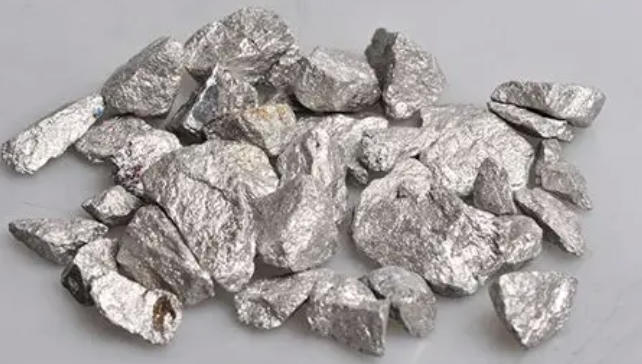
It is primarily produced by the aluminothermic reduction process. Niobium ore is mixed with a reductant (aluminum powder), an iron source, and flux in proportion, and then ignited in a reaction furnace to initiate a high-temperature reduction reaction. The resulting molten ferroniobium is separated from the slag, then cast, cooled, and crushed into standard-sized lumps (10-50mm).
Key Features
Effective Microalloying: Dramatically improves steel properties with very low addition amounts (0.03%-0.05%).
Improved Toughness: Significantly enhances low-temperature impact toughness, especially in the weld heat-affected zone.
Process Stability: High niobium yield (typically >95%) and precise composition control.
Applications
High-Strength Low-Alloy Steel (HSLA): Used in pipeline steel, structural steel, automotive beam steel.
Steel for Engineering Machinery: Enhances wear resistance and load-bearing capacity for heavy machinery.
FAQ
Q: What is the main difference between FeNb and FeV?
A: FeNb excels in grain refinement, significantly improving weld toughness, making it ideal for applications like pipeline steel requiring excellent weldability. FeV excels in precipitation strengthening, providing a more direct strength increase. They can be used in combination.
Q: What are the packaging and storage requirements?
A: Typically packaged in jumbo bags (~1000kg) or moisture-proof steel drums/woven bags (e.g., 25kg/bag, 50kg/bag). Store in a dry, ventilated warehouse, protecting against moisture.
Hot Tags: ferro niobium, China ferro niobium manufacturers, suppliers, factory, Ferro Niobium, Ferro Titanium, Ferro Vanadium, Ferrop Hosphorus, specialty ferroalloys
Previous
Ferro TitaniumNext
Ferrop HosphorusYou Might Also Like


Send Inquiry